27.2.10

Evora


In Evora there is a church
and the church was once a mosque
and the mosque was once a church
and the church was once a temple
in the time of the Romans

Behind the altar there is a false tomb
and beneath a Christian name there are thousands of years
of roots writhing through stone
and water echoes up vertebrae which must have been steps
and its light is the juice of emeralds

Now, consider the well that is my throat
and the pool that is my chest

What does one do when a well has been capped
for so many generations?
Is water safe in the stomach?

How did I become addicted to a self-imposed periphery,
its tithes, its prick and its poison?
Can all of this be unlearned in one generation,
one season, one summer?


My grandfathers and grandmothers
and their grandparents meet for the first time in me
I carry them to familiar places
I am their hands, their thighs, their nose,
their eyes, their lips, their teeth, their tongue

How did I become addicted to a self-imposed periphery,
its tithes, its prick and its poison?
Can all of this be unlearned in one generation,
one season, one summer?


I am the voice and the body now
and all that is closed will be opened
and all that hurts will be repaired
and all that sleeps without dreaming will be green again

In Evora there is a church
Inside the church there is a tomb
and inside the tomb there is a cistern
Inside the cistern there is water
and it’s light is the juice of emeralds


Evora [#58]
© 2000 Fammerée


* * * * *

“Evora” appears in Lessons of Water & Thirst,
a book of poems by Richard Fammerée.

* * * * *

Richard Fammerée
fammeree.com
fammeree@att.net
director@universeofpoetry.org


* * * * *

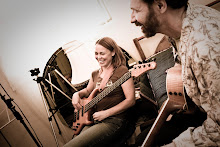
To experience the live performance of Evora
with music composed by the artist, please visit:
http://fammeree.com/Poetry_music.html
and listen to selection #1.

* * * * *

Photograph by Susan Aurinko

* * * * *

Evora
(Français)

A Evora il y a une église
et avant l'église il y avait une mosquée
et avant la mosquée une église
et bien avant encore un temple romain

Derrière l'autel il y a un faux tombeau
et sous un nom chrétien des centaines d'années
de racines s'enchevêtrent à travers la pierre
et l'eau résonne dans ces vertèbres qui devaient être des marches
et sa lumière est la sève des émeraudes.

A présent, imagine que le puits est ma gorge
et l'étang ma poitrine

Que fait-on quand la source est enfouie
sous tant de générations?
L'eau est-elle toujours intacte en son ventre ?

Comment me suis-je laissé aliéner par cette périphérie imposée,
ses dîmes, ses piqûres, ses poisons?
Tout cela peut-il être désappris en une génération,
une saison, un été?


Mes grands-pères et mes grands-mères
et leurs grands-parents se rencontrent en moi pour la première fois
Je les conduit dans des endroits qui leur sont familiers
Je suis leurs mains, leurs orteils, leur nez,
leurs yeux, leurs lèvres, leurs dents, leur langue

Comment me suis-je laissé aliéner par cette périphérie imposée,
ses dîmes, ses piqûres, ses poisons?
Tout cela peut-il être désappris en une génération,
une saison, un été?


Je suis la voix et le corps maintenant
et tout ce qui est fermé s'ouvrira
et toutes les blessures seront réparées
et tous ces sommeils reverdiront

A Evora il y a une église
et dans l'église il y a un tombeau
et dans le tombeau il y a une citerne
et dans la citerne il y a l'eau
et sa lumière est la sève des émeraudes


Evora [#58]
© 2000 Fammerée


* * * * *

Evora
(The story)

For once I should have listened to Zarathustra, Johnny (Jean-Claude
from Suresnes), Oceana or at least Slippers, fellow street musicians
outside of Shakespeare & Co. in Paris. Even the Irish singer with the
pregnant Dutch girlfriend--who collected for all of us on a good day--
knew better. But I was barely twenty years old. Instead of searching
for a discounted flight, I rode trains and buses south and soon realized
that (1) Marrakech would be much farther than my hand-drawn map
suggested and (2) winter was not a cooperative season in the Basque
region or Spain. Portugal lay anesthetized at the edge of the world,
only the wind recalling the resurrection of green in April and braying,
praying for its return.

Evora is a relatively small town which grew around a very prominent
cathedral. I surveyed pillars which appeared to be Roman; they were
smooth and cold to the touch and colder by the moment. The desire
for warmth awakened me from the spell of history as the tepid, watery
light continued to diminish. Fortunately, a guitar is a passport, and I
was welcomed into a family restaurant and their evening sessions of
songs and tales.

Five or six days later, an overnight bus was finally announced for
the Spanish border. The granddaughter who lived on the top story
of the moldy stone house informed me, then invited me to follow
her to the cathedral. I was led to the altar where her grandfather
was kneeling. Through her translation and angular movements he
requested that I help him remove a brass plate set into the marble
floor.

I knelt and examined the polished, reflecting testament. A long
name, a long cross, a dash separating two years--the most succinct,
evocative poem in any language.

Not sharing the Portuguese and Spanish enthusiasm for skeletal
remains of saints, I hesitated. My companions struggled. I closed
my eyes and prodded and pushed with my fingertips.

Gradually, eyes still closed, I felt a moistness, a freshness, a presence.
My fingers were bathed in a green light rising as a mist from the
sepulchre which held the remains or fragments of no perceptible body
other than the womb of earth.

The elder explained with foreign words and signs. The young girl
translated haltingly. I began to understand that this church had been
mosque and Saracen stronghold in the time of the Crusades; a church
again during the epoch of Charlemagne; a temple in the time of the
Romans; and the source of pure water, the source of life, the presence
of the Goddess in prehistory. The water was still pure after centuries,
as it had been in the beginning.

Through Spain, bus after bus, I searched the metaphor and realized
as we arrived to a trembling vista that is the sea between land, the
Mediterranean, I am that church. Each of us is that church, guardian
of the source for the portion of forever we call a life.

By the time I stepped into my first morning of Morocco, I had finished
this poem and its accompanying music.


Evora [#58]
© 2008 Fammerée


* * * * *

“Evora” appears in Lessons of Water & Thirst,
a book of poems by Richard Fammerée.

* * * * *

Richard Fammerée
fammeree.com
fammeree@att.net
director@universeofpoetry.org


* * * * *

To experience the live performance of Evora
with music composed by the artist, please visit:
http://fammeree.com/Poetry_music.html
and listen to selection #1.

* * * * *

Photograph by Susan Aurinko

* * * * *

25.2.10

Even a God


When all statues are relieved
of measure and divinity and fall or do whatever stone finally does,
that next morning, we shall have to live, even as orphans of white forms and brass
forms, without
reference
without
bracing,
bevel
and cut,
names without
verdigris, without pedestals and pigeons, however first
or last

True, I shall miss cold breasts and clean
hooves

When the hero on the horse is gone
I shall have to face the sky with eyes
that never close and a composure that challenges even a
god


Even a God [#57]
© 2010 Fammerée


* * * * *

Richard Fammerée
fammeree.com
fammeree@att.net
director@universeofpoetry.org


* * * * *

Photograph by Susan Aurinko

* * * * *

21.2.10

A little dusty and turning inwards

At a sudden sound my daughter asks, What is that?
convinced there is someone in the back garden;
but there is no one, only death standing in the tall snow
watching me through the window or perhaps,
perhaps, the house plant whose leaves are already
a little dusty and turning inwards.


A little dusty and turning inwards [#56]
© 2010 Fammerée


* * * * *

Richard Fammerée
fammeree.com
fammeree@att.net
director@universeofpoetry.org

12.2.10

An Argument for Eternity


A boy is holding a green button
A field is holding the boy
and three horses gazing and one
pony tittuping narrowly, narrowly, wanly
warily
. The river Egress
is holding the field and a fish
for every tree, a leaf
for every fin

Fire holds the river; sky holds the fire

The button is all that remains
of a velvet Sunday
school dress, green as everything forever
of the earth, forgotten of the earth, forsaken
in the earth, each wish, each
petal

All that remains of the girl, first
girl and last: rain and cathedrals
indistinguishable;
inviolate, the light regardless and green
recumbent

The button is holding the boy, green
boy, tree boy, ignorant of Sundays and Sunday
schools, their god, their heaven, their claims
to April
He seeks one promise as they seek one God

and he is guardian of the button, hand-painted relic,
splinter of her sixth year, pilule, proof of
resurrection, the second emerald
extant

the promise of her
chalice above and below


An Argument for Eternity [#55]
© 2009 Fammerée


* * * * *

Richard Fammerée
fammeree.com
fammeree@att.net
director@universeofpoetry.org


* * * * *

Photograph by Fammerée

* * * * *

10.2.10

I Was This


I was this, I was that white
unwinding
reminding me of my aspirations, every destination
beyond the field of cows. Of crows.
The sun is the same and the gradation of green
from colors extinct (beyond viridian) to the absinthe
of the waving bank fed by the Lethe.
I lie down spotless, wing and wing and a body only beating to support wings.
I am before words,
before words were committed to the page,
before the page was married to thought,
before thought was narrowed to a line, a long, dead
line.


I Was This [#54]
© 2010 Fammerée


* * * * *

Richard Fammerée
fammeree.com
fammeree@att.net
director@universeofpoetry.org


* * * * *

Photograph by Spinella

* * * * *

7.2.10

Camera obscura


I could capture everything
with one hand

It was our last day
at the mouth
of the river and its turning

We visited the elongating woman
and her valiant child her stout blond boy
where spirits enter the world
uncoiling
the tree its swing
wooden and waiting
within its arc
a mother once a sad faithful woman
my mother
still attending from two frayed ropes

I captured it

I captured my daughter running
between water and violet
fire and viridian
emeralds and ancestors their green
day bed of reveries
a mythology of first days

I captured the mythology of first days

I captured the great tree
reigning
the river ensconcing
encoding
spirits approaching
poets remembering
silent blue sounds yellow in the air yellow
in my hands and nostrils

Of course I want to cry

I believed I owned all of this by virtue of recognition
and capture

Spirits in the cemetery did this
I’m fairly certain I purposely left
my shoes
on the beach take those malcontents lying
in the throat of earth behind
tongues of stone and names
and dates vanishing greedy
even without their bodies

The earth does not cleanse them
religions are wrong
They took the camera and will never return it
We are hidden
in their earth and ash in the earth
and ash of their hearts

for the earth is not theirs it never was as it is not ours

Fortunately the swing was a camera

Fortunately the sky is a camera

Fortunately I am the camera

my leg is the camera

There are other explanations
Someone in the airport
Some things never leave the island
shells and lava stones for example inanimate
intimate witnesses I suppose I too
will one day be kept behind

At this thought at night
to the rhythm of my breathing
and my wife’s breathing furrowing
with our few seeds breathing up and breathing
down while squirrels run
up and run down on the other side
of the dark glass hurrying
and hurrying for a few seeds
I review everything I can remember
our daughter the dazzling viridian
the mossy Arthurian the hurrying forward
and back the kicking and chasing the bright
blue ball the bright blue bowl of sky
she will remember and identify with
I pray
from a time when I was with her
at the mouth of the river


Camera obscura [#53]
© 2010 Fammerée


* * * * *

Richard Fammerée
fammeree.com
fammeree@att.net
director@universeofpoetry.org


* * * * *

Photograph by Fammerée

* * * * *

3.2.10

OK to Disconnect


I have been advised to protect myself
by inviting the aggressive and envious into light and spiritual
evolution

never attempting to protect myself with reactive anger or curses. Wencke of the Arctic Circle amid 320 droplets
of gold confirms, Curses always reflect back.

Send angels--she reappears--and see what happens--

Susan of Middle Earth and revolving blue lines greening toward their center, suggests to say, ‘Come into the light. Can you find a teacher or loved one to guide you?’ Most entities will vanish. If they have not, continue to lead them, protecting yourself with prayer in the presence of the Mother.

Rachel, once the wife of Jacob, unties knots, however tedious,
with fingers whose bones were born of Bethlehem. They will remember
and fashion a tiny crèche beneath a tenuous tree centuries later
as she chants in the ancient, difficult language of words braided
lyrically together. Thus east become west.

Carol of the Circle of Songs at the bower of all to be sung
braids fire and light. Thus west become east.

Eileen is the fifth element required by meditation. Somehow
she conjures and preserves images from the forever dark of the boy
who walked the valley of the shadow of death and feared no evil.

This is an offering, then, for the lone light in the all
darkness, circle within a circle within a circle within each
indecipherable consonant cryptic yet glimmering as the amethyst
belly of stone. In fact, it is written on nothing, on air.

So, flight. I move now in a medium of nothing and everything--
which is refreshing. Flight will teach me to walk again as I should have been taught as a child, in the days of reflecting, distorting red orbs-
-which can no longer follow
and disturb me.

I am no longer a walking remembrance.
You know who you are. Forgive me.
You know who you are. Do not come to me with stories of past lives or future debts.
I can no longer carry this.
It is yours now. I am disconnecting, and with each pull of fingers I envision feathers. My daughter
brings me an array of feathers. Dark, dark blue, true, true green and ravenous red.
She calls them leaves.

It is surprising that life becomes shallower and shallower.
This morning I saw Yeats float by, face up, a book pressed to his chest. His poetry, I imagine.
There were others, perhaps his colleagues. I did not recognize them. Some were
face down, dressed in somber colors only further darkened by water;
I had not slept well,
but, still, I did not search for myself among them.

I could not sleep those first nights in the teeth of the ravine
where the menaeds had left me.
Every time I moved my leg, I awoke, startled with pain.

You know who you. Each of you. I send you an invitation into light,
but the place on my back just above the right hip is no longer available to you.
I hear your footsteps hurrying forward and back, along earth and marble. In alarm
as I caulk the weeping hole with earth. The weeping hole with certainty; the bleeding
with a single curtain, call it compassion, for it is white and sheer;
the grieving
with practiced gratitude.

It should have been evident that anyone who loves me for what I do
but not for who I am, does not love me. This includes myself,
of course--for why else would I have encouraged lesser love


Take what you have. I shall ask for nothing in return, but I send you
forth from me as I send me forth from you into the remainder of all.

I have thirty-three years before me. I was told this multiple times
in the mirror. The face was not and may not be recognizable.
I have thirty-three years of work. And, now, that I recall my destiny--
my assignment, now that I have a certain direction
to walk, I shall walk.

Here is the chain that cripples:
Cynicism is a symptom of a lack of faith.
A lack of faith, of course, compounds cynicism and eases the corridor
into unhealthy, unjust behavior

The only remedy is truth

The chain--as all chains--begins in abuse

The circle continues to wrap about itself, ever widening until
Jacob finally Wrestles With God
24
So Jacob was left alone, and a man wrestled with him till daybreak. 25 When the man saw that he could not overpower him, he touched the socket of Jacob's hip so that his hip was wrenched as he wrestled with the man. 26 Then the man said, "Let me go, for it is daybreak."
      But Jacob replied, "I will not let you go unless you bless me."
 27 The man asked him, "What is your name?"
      "Jacob," he answered.
 28 Then the man said, "Your name will no longer be Jacob, but Israel, because you have struggled with God and with men and have overcome."
 29 Jacob said, "Please tell me your name."
      But he replied, "Why do you ask my name?" Then he blessed him there.
 30 So Jacob called the place Peniel, saying, "It is because I saw God face to face, and yet my life was spared."
 31 The sun rose above him as he passed Peniel, and he was limping because of his hip. 32 Therefore to this day the Israelites do not eat the tendon attached to the socket of the hip, because the socket of Jacob's hip was touched near the tendon. -Genesis 32


OK to Disconnect [#52]
© 2010 Fammerée


* * * * *

Richard Fammerée
fammeree.com
fammeree@att.net
director@universeofpoetry.org


* * * * *

Photograph by Fammerée

* * * * *

9.11.09

The Oldest God in the World


Upon this
the oldest God and the youngest God concur:
The world is a bridge
Cross it but build no house upon it
The world endures for but an hour
Spend it in devotion
The rest is unseen


The Oldest God in the World [#51]
2009 Fammerée


Thank you, Michael Wood & Yehoshua ben Yosef


* * * * *

Richard Fammerée
fammeree.com
fammeree@att.net
director@universeofpoetry.org


* * * * *

Photograph by Susan Aurinko

* * * * *

4.11.09

An English November


I stood here beside
this red post
this dog post
I stood here because
I did not want to see the way
the pastor the mirror the four
bevelled corners had used words
however accurate however bronze and fragrant
and I said faint
as in fabled
and you said sullen
as in silken
the way silk falls somewhere in this tented street
this lane again obscured
by moonlight more
vaporous langorous less
suspicious less deliberate than each humming
lamp
cold milk turning
cold each of us humming
fraying mumming I could have told you
but the progression to prayer was not
what you wanted to hear not that night
before the fire
in the grating in the pub the grazing
the green
viridian and oaken walls and glasses glowing
golden within
and without as if time were caught
in the sap of Hennessy slowing
to the tempo of the chair
in the door frame hovering unpainted guarding us from the future
glass within glass within glass
each of us stepping back
to that moment each of us silvery
curtains of filagree
and trees each tree
bowing never failing
whipped by wet wind still
dripping never ending enduring never
lime brushes turning black turning back turning
godly lit into a gilt Constable sky
a telephone a telephone a telephone
burrowing into absence
absence into absence into milky abstinence
quiet into rain into rain
lingering on the other side
of The Four Quartets 17 c.
quadrants of glass sky tree facade reflection
through a glass and a glass darkly she of he of she who had
occupied the sculpted chair the dead chair guarding us from the future
hovering in the door frame
you want me to return why now
sleep lay between us
your blouse
your brown shoes
your Run Lola Run shoes and the mystics
we imagined
into each successive light
only to enter the shadows of one


An English November [#50]
© 2009 Fammerée


* * * * *

Richard Fammerée
fammeree.com
fammeree@att.net
director@universeofpoetry.org


* * * * *

Photograph by Fammerée

* * * * *

17.10.09

Orpheus Recusant


In this widowed room I repeat
the lessons of my senescent heart,

bead by bead. I ready myself
for the opening of the bitter book

which counsels your faith
and the colored book attending

with cap and bells the approach
of our impatient story:

Attic blessed, fluted
with Lydian melancholies, the umbria
implicit in your breast

We adorn ourselves with tears and amethyst
as children of the Queen

No eclipse will ever elicit a denial
between us


This hand-pressed netting,
this veil of brides, this storied fabric winding
its whisperings about us, sleeplessly

compelling our mouths together for breath, for
birth:

I now assume Botticelli’s love
for you


And if time were to abandon us in some unmeasured
embrace, I would rest beside you
until we were chosen to be brought forth again
from the cold.


Orpheus Recusant [#49]
© 2000 Fammerée


* * * * *

“Orpheus Recusant” appears in Lessons of Water & Thirst,
a book of poems by Richard Fammerée.

* * * * *

Richard Fammerée
fammeree.com
fammeree@att.net
director@universeofpoetry.org


* * * * *

Photograph by Susan Aurinko

* * * * *

11.10.09

The Absolute of Indigo

This mosaic of mesmerized silver
fish and chartreuse
scum harboring
seed pods
sailed all green things once
to the young peninsulas

of my lungs.

I was held to this stone
hundreds of fish years ago.
My mother warmed me and warned me; but
an emerald billowed up and
I skipped ahead, popping and twinkling
as a skiff's pennant, a tin of spinach
pressed to my biceps, and I begged my mom

not to be afraid.

All things are arranged now in my vessel.
I hear her. She whispers, Do not worry, as she passes,
bludgeoned
with twilight, into the absolute
of indigo.


The Absolute of Indigo [#48]
© 2000 Fammerée


* * * * *

“The Absolute of Indigo” appears in Lessons of Water & Thirst,
a book of poems by Richard Fammerée.

* * * * *

Richard Fammerée
fammeree.com
fammeree@att.net
director@universeofpoetry.org


* * * * *

12.7.09

Ephemerae

I could not sleep while you slept.
Any little animal might have sheltered
in your body; and I kept
leaves from your eyes and things from your hair
until your lips revived, bending
back my fingers to the lessons
of water and thirst. Fires that night
digested the wet, and when their long viridian
became your arms and a delirium
became our legs, threads
relinquished us, and we were not puppeted
by earth, and we were not puppeted
by heaven. We became
larger than form and texture and scent--
something like clouds--and fear was driven
from the manger of our bellies, and anger's thin
lips could not diminish us. We ate everything
that was red,
and everything red
was delicious. My sap was greening
your milky body, then your legs slapped.
They slapped into fins and you arced
and my chin and
ear separated, and silver and more silver and silver
again, I quivered behind you.


Ephemerae [#47]
© 2000 Fammerée


* * * * *

“Ephemerae” appears in Lessons of Water & Thirst,
a book of poems by Richard Fammerée.

* * * * *

Richard Fammerée
fammeree.com
fammeree@att.net
director@universeofpoetry.org


* * * * *

Ephémères (Français)

Je ne pouvais pas dormir pendant que tu dormais.
N'importe quel petit animal avait pu se réfugier
dans ton corps; et j'enlevais
des feuilles de tes yeux et des petites choses
de tes cheveux
quand tes lèvres se ranimèrent et revinrent
à mes doigts aux leçons
de l'eau et de la soif. Les feux cette nuit-là
digérèrent l'humidité et quand leurs longs viridiens
devinrent tes bras et le délire
nos jambes, les fils
nous lâchèrent et nous n'étions plus pantinisés
par la terre et nous n'étions plus pantinisés
par le ciel. Nous devînmes
plus grands que la forme, la texture et l'odeur--
quelquechose comme des nuages--et la peur était chassée
de la crêche de notre ventre, et les lèvres pincées
de la colère ne pouvait nous entamer.
Nous avons mangé tout
ce qui était rouge,
et tout ce qui était rouge
était délicieux. Ma sève verdissait
ton corps laiteux, puis tes jambes claquèrent.
Elles claquèrent en nageoires. Tu te cambras,
mon menton et
mon oreille se détachaient, et le vermeil et plus
de vermeil et le vermeil encore, je tremblais
derrière toi.


Ephémères [#47]
© 2000 Fammerée


* * * * *

Richard Fammerée
fammeree.com
fammeree@att.net
director@universeofpoetry.org


* * * * *

4.7.09

Sang-froid (Living With An Actress)


You touch as if to remove lipstick.

There is every shade of blond in the lock
stopped by the authority of your right
eyebrow. Editing annoys you.

Green bees upon a field of chartreuse annoy
you. Conflict between fabric and design
is unpardonable. (Napoleon and Madame R.
may have favored the symbol, but all this
belongs to a previous denouement.) After
your mother died, you did not come
home.

Last night you did not come home. When you
were Ophelia, I untangled each blossom
from your hair.


I fought past Hamlet into the grave.
I expired before you upon our tomb, assuming you
would follow.


You unloose your hair and the chimera
of a smile; I choose the long face
of a Sadducee, for in this next scene we deny
the resurrection of the dead


Sang-froid (Living With An Actress) [#46]
© 2004 Fammerée


* * * * *

Richard Fammerée
fammeree.com
fammeree@att.net
director@universeofpoetry.org


* * * * *

Photograph by Susan Aurinko

* * * * *

3.7.09

My Last Hour (Upon Paros)


Shakespeare would have introduced me
earlier, roaring forward into a high halo
of reflected light, bursting into
constellations upon the tomb of that Capulet
wall.

My heart is not ready
to be unhorsed; my horse is not ready
to be lead from unwashed dancing. What god
can offer a dispensation?


From a cold throne of seven marble steps,
I regard blades of hair and slopes
of shoulders, schooling forward in stripes
and prurient florals.
They are closer to the stem;
it is not this late for them.
The proud pennon of my smile flies before
the teeth of my defenses, but there is nothing more
and no one left to vanquish.
Archers and cupids relax their
wrists; and the statue of my head begins
to assume the face of a cloud.
I admit exhalations of every lung, leaf and
thing.

I breathe, I am, and I am
the sum. How I have occupied myself

with disappointments and intrigues,
amassing a coat
of many things and thorns.

I remove my shoes.
The vast ultramarine (for air is a sea
where we, the anxious, feed at the bottom)
claims the blue veins

of my feet. Ants crawl darkly in farewell.

They were first to play with me, too.
I remember.
I destroyed many with my heel and toe, grinding
them into pepper.

Why would a child do that? What did I know?
What did I remember?


My Last Hour (Upon Paros) [#45]
© 2009 Fammerée


* * * * *

Richard Fammerée
fammeree@att.net
director@universeofpoetry.org

* * * * *

Photograph by Susan Aurinko

* * * * *

2.7.09

Gone


Now, Lucille is dead.
Her executor had all photographs raked
to the center of the living room;
but the tarnished
teacups from Brussels are gone.
Robert's water colors have left
only white rectangles, and the cardinals
Lucille embroidered after their marriage
(two lobes of one heart seeking
with identical beaks) will never again
support her back or mine.

Who sits in that chair beneath a clock now?

I have nibbled and sucked at
chocolate-dipped cherries
as my fingers pressed and left their breath
upon the Christmas-cold of this window.
I have sat here with my mother, with both
of my parents, with would-be wives.

I arrange us by holiday, decade, generation.

Here is my great-grandfather
in a churchyard in Belgium. He is not yet
my age.

If this single image were lost,
our nineteenth century would be lost,
and his death would be complete.
I lay him and his daughter Eugenie and her
daughter Lucille to the silk of a suitcase
which once belonged to his mother.

Here, everyone who is gone is together again.


Gone [#44]
© 2010 Fammerée


* * * * *

Richard Fammerée
fammeree.com
fammeree@att.net
director@universeofpoetry.org


* * * * *

1.7.09

Green Man (A Song)


If we were one God, we would feed each other
everything; and everything would eat us,
and we would never die.

My tongues would serpent in your temple
where water becomes blood;
and the pink imprint of our lips would be
a talisman above the bed.
We would not need
to protect our skin from light; we would not need
to protect our skin from skin;
and nothing red would be unclean
at the mouth of the Tigris.

I know what the dark book teaches, but the garden is within us all.

I am a green man, and I am my messiah now.
I am not embarrassed, I am not alone, I am
not afraid.
I cannot lose anything, for nothing is mine.
And I will never be hungry, for everything is mine.
Where, then, is the throne of heaven.

If we were one God, we would not appease
fathers of don't.
We would kiss the tips of each other,
for lips are the spout of the fountain
and eyes, the light of the fountain.
Nipples are ready to blossom,
and a rose is a mouth of the mother.
I am a finger, and you are a finger.
Our hand is a leaf, our leaf, a wing,
and leaves and wings will cathedral us again.


Green Man [#43]
© 2005 Fammerée


* * * * *

Richard Fammerée
fammeree@att.net
director@universeofpoetry.org


* * * * *

“Green Man” appears on Lessons of Water & Thirst,
a recording of poems and poem songs by Richard Fammerée.

* * * * *

Photograph by Susan Aurinko

* * * * *

A Boat


Your toes to my bow, a knee
to your aft, my fingers inside a strap of
your camisole, your arms vining
and rubbing
and the movement of my right shoulder

I untie from my God and every god story-- Come the wind
and the wake and the rain


Sap fattens and ovals our lips, blind
petals of a previous crossing
They are tart; they are wet
They are plum; they are asps


Look, the water is tarnished. It is the first generation
of leaves dying

Down in our belly
we are happy. We twine in the delicious
deciduous mess of our
pulp


A Boat [#42]
© 2000 Fammerée


* * * * *

Richard Fammerée
fammeree.com
fammeree@att.net
director@universeofpoetry.org


* * * * *

“A Boat” appears in Lessons of Water & Thirst,
a book of poems by Richard Fammerée.

* * * * *

Photograph by the artist

* * * * *

19.6.09

Notre-Dame (de Longueville)


A dead man bolted to a daed tree is
lodged like a bone in the throat of Notre Dame.

A tongue flickering in a lamp cannot be suppressed.

Before the burinings and conversions this choir
was a barrow where my fathes and mothers were brought
and planted like seeds in a belly.

The clerestory and blindstory were trees and each cold
intricacy, a leaf.

I forgive the bowed and kneeling patriarchs
and matriarchs separatee d by stone ribs, for they knew not
what they did or they were afraid or they did
know and are buried now in stone.

Before I left Chicago, I saw Auntie Jeanne standing
on the the corner of Irving Park and Clarendon.
A squealing bus did not disrturb her because she is dead.
Her coat was so old and her hat so ridiculous, I almost
hurried out to huddle her into my car,
but she wasn’t
watching for me, and she wasn’t
waiting for the bus like the others. She had come for her
daughter who was dying.

I have crouched in a savory cathedral like this before waiting
to be born, sipping and sleeping to the thumping
of a big bell beneath the bold
cupolas of a mother’s breasts, absorbing pink stories
from windows of flesh stretched
between ribs, woring
toward a slit at the nape of the twin towers
of her knees.


Notre-Dame (de Longueville) [#41]
© 2000 Fammerée


* * * * *

Richard Fammerée
fammeree@att.net
director@universeofpoetry.org


* * * * *

Photograph by Susan Aurinko

* * * * *

“Notre-Dame (de Longueville)” appears in Lessons of Water & Thirst,
a book of poems by Richard Fammerée.

* * * * *

18.6.09

A Rose and Its Seiche


When Daphne decided to allow her breasts
to receive mouthings, the severed Gods became alert, for her
essence could weep to the turnings
of a tongue.

Undefiled and clever, she wrapped herself
in incantations: a ruse and its worm, a rose and its seiche.

Now a deer, now a thrush nosed the vulva of a knot, and she
rose before him, and the moss of her unbound the blossom
of his lips.

Her chest became a harp and he became the other half.


Silver threads fastened their sternums, and she held his wrist
to her hip, and he rose into the god green ring.


A boar urinated down her untwining legs, tearing at new hair
indiscriminately.

Daphne tore at her hair.


There was coarseness and weeping aloud.
She concluded that speed and departure are preferable
to bark.


Once she stopped. Her breasts stopped. The wings of her hair
fell. Her mother (who had offered her plumper body
at the time of the boar) perched,

the size and color of a heart.


Beyond the tips of Daphne’s pinkness, a freckled back
strathspeyed, sprang, cartwheeled, reeled
and dashed, flipped,


flipped, flipped and leapt.

The thought--This could be my daughter. She should have been
my daughter--
frayed her lips.


A Rose and Its Seiche [#40]
© 2000 Fammerée


* * * * *

Richard Fammerée
fammeree@att.net
director@universeofpoetry.org


* * * * *

Photograph by Susan Aurinko

* * * * *

“A Rose and Its Seiche” appears in Lessons of Water & Thirst,
a book of poems by Richard Fammerée.

* * * * *

9.6.09

Asleep in Ireland

My forehead touches folds and stone. It is mud
and gold. It is sky
silvered. Its curls fondle a puddle where fingers abandon
the wind to huddle as babies
at my breast.

I am asleep in a waving field in Sligo, and the earth
mothers me.

Oh, how I love my sleep in Ireland.

All that has transpired during the previous nine years
is now a dream. When I awake
to myself unblemished,
dressed again in juniper:
I did not invite Deborah to Dublin.
We were not married in the Shelbourne Hotel.
We did not abandon the family on Wicklow,
and the family in Wicklow did not abandon me.
I did not retreat with her to Germany.
There was no divorce one year later.
I did not soil my story, and my story did not soil me.
I did not lose my adventure.


I first knelt in this dimple of nettles and puddles upon
the forty-second day of my great pilgrimage.
The sun was my shield, the fields unlettered and not dying.
I lay my bag next to this rock and lay my head
upon my bag.

I slept to the rhythm of cows
and clouds, the moon, invisible in cerulean, wandering
and blessing the shore of me
asleep upon this belly, burning with the yolks of furze
flowering into the big, dreamy, beating silence
of the embryo.

Hobo licks my palm. We walk hills wet, wax
green and valleys wetter and greener.
The sheep farmers do not concern him.
They have not yet poisoned him. He is turning away and
turning back, orange and lime
in the sun.

He is an Alsatian like me and a stray. When he died, I
buttoned him into my flannel shirt and buried him beneath
a plum tree.

We sleep now in Ireland, separated only by a vast mirror
of earth. I bite
into fruit nourished by his body. Hobo knows me
as I enter the mulberry trees.
My mother greets us from an iron chair. She rises. She, too,
is smiling victoriously. She is lantern lit, beautiful again.
I knew that she could beat the cancer.
I knew that she was still alive. I say to her,
Now, don’t upset. But there was a time I didn't know
you. Years and years when you wore your hair like this--
[I gesture.]
All lost. All that time is lost.
She begins to cry, but we are together again.
Before I can introduce Hobo, I awake.

I begin to move my limbs.
There is gray in my beard but I do not see it, for I have no mirror. I believe that I am healed.


I believe that I am healed.

All that I have dreamed is real. All that has shortened
my breath and scarred me is a dream.

With what god do I negotiate the is arrangement?
And what more must I offer?


Asleep in Ireland [#39]
© 2000 Fammerée


* * * * *

Richard Fammerée
fammeree@att.net
director@universeofpoetry.org


* * * * *

“Asleep in Ireland” appears in Lessons of Water & Thirst,
a book of poems by Richard Fammerée.

* * * * *

5.6.09

Orpheus Recusant

In this widowed room I repeat
the lessons of my senescent heart,

bead by bead. I ready myself
for the opening of the bitter book

which counsels your faith
and the colored book attending

with cap and bells the approach
of our impatient story:

Attic blessed, fluted
with Lydian melancholies, the umbria
implicit in our breast

We adorn ourselves with tears and amethyst
as children of the Queen

No eclipse will ever elicit a denial
between us


This hand-pressed netting,
this veil of brides, this storied fabric winding
its whisperings about us, sleeplessly

compelling our mouths together for breath, for
birth:

I now assume Botticelli’s love
for you


And if time were to abandon us in some unmeasured
embrace, I would rest bedside you
until we were chosen to be brought forth again
from the cold.


Orpheus Recusant [#38]
© 2000 Fammerée


* * * * *

Richard Fammerée
fammeree@att.net
director@universeofpoetry.org


* * * * *

“Orpheus Recusant” appears in Lessons of Water & Thirst,
a book of poems by Richard Fammerée.

* * * * *

4.6.09

L’Embarquement pour l’Ile de Cythère


We loved in the cup of a blossom
It was violet, it was Tuesday
petal deaf, petal deep
tintinnabulum
blue matinal sheer silent shivering

time, hand-sewn as summer, little seams, little scars

the past which always follows the bitter
chocolate, the particular wine

Wednesday, its gilded frame opposing the deep wooden bed, the shroud our bodies

blind scrolls

hundreds of mothers and fathers
before literacy, the touch of a blond beak to the palm, each palm

pressing back, it was this
juice rising and quivering in the wand of beginning and end

Beginning and end always with us

always
in that cup unitil it dropped its great violet, violent
head


L’Embarquement pour l’Ile de Cythère [#37]
© 2009 Fammerée


* * * * *

Richard Fammerée
fammeree@att.net
director@universeofpoetry.org


* * * * *

Photograph by Susan Aurinko

* * * * *

21.5.09

The Child Messiah

In a diaspora a bride is kneeling. Red needled
Rhine roses, white flowering, and rowan
embower her, worming

methodically, Gothically. Butter-colored
berries penciled in viridian wreathe her
hair, coiled to the hollow
of an immaculate breast. Within
that maw of two, unfinished
hands, a messiah begins.

His back is spotted with gold,
his fingers are filigree born from her body,
his lips love the timbre of her
nipples, and his belly is full of her.


One wind-reduced tree appeals the windless face
of the bald blue Father and his bearding
Son, swathed in crinoline

and icing winged. She molds the boy
beneath this tree.


Now the woman rises slender backed and silver
chested. She faces her discontent,
and Canaan becomes
dust.
The child faces the water.
The other shore, she assures him, will be
the same: the same white
grass, the same wild rowan and glass blue
sky, leaves sanctuary clean and gray, green
as dull, blunted blades.
Look-- There are no shadows
on the river, no serrated fingers
where blue fish feed.
But I am free, he coils.
I am twenty-four and I am free.
I could go anywhere from her
e,

his wrist flies and
flails. Dust-colored
magi smile, sucking
marrow and bits of roasted skin
from wings. Reliquary
wrist
, the lampblack decree.


One woman of successive faces
appeals this bearded son.

Each holds the boy beneath her
tree.
He must birth pomegranates and violets and
all things green and unraveling.
He must abandon his granite
patrimony and attend her
shadows with the unfailing
furrows and arrows of a father.
And there will be nights he must
attend alone;

but his lips love the timbre of her nipples as her hair
plays upon the sky a promise
of wings.


The Child Messiah [#36]
© 2009 Fammerée


* * * * *

Richard Fammerée
fammeree@att.net
director@universeofpoetry.org


* * * * *

12.5.09

Each Body Beautiful


Always ready to be unloosed from satin and the white bodice of clouds,
each body beautiful, its river, its sinuous logic,
its deliberate destination

towards the sun, away from exhausted deities, away from death

There I am before death and here after
the hesitation
between leaves, between
knees


The sky is worn thin, I planned to sing


[chorus, when sung]
Twelve thousand skies
Twelve thousand nights
I should have known
I would outgrow a fascination with empty


Each Body Beautiful [#35]
© 2009 Fammerée


* * * * *

Richard Fammerée
fammeree@att.net
director@universeofpoetry.org


* * * * *

Photograph by Susan Aurinko

* * * * *

11.5.09

Scar (Just Another Scar on the Body)


But sleep, a beaded talisman. Our hearts working
as rain, fluttering

forests of rose and bone, perpetually reborn, protected
by thorns, where fear is sin

where no sword turns

where angels are the body within

each body a portal

Each window as hesitation
What are salt and glass to me


You understand even if you pretend not to
The way the dying light favored you five hours later--
staining your blouse, staining our fingers

that last light lives in your body
and the soul of your body as auric deities hidden in dripping
caves


[chorus, when sung]
Just another scar on the body
Every arrow points to somewhere
You are always pointing to come home


Just Another Scar on the Body [#34]
© 2009 Fammerée


* * * * *

Richard Fammerée
fammeree@att.net
director@universeofpoetry.org


* * * * *

Photograph by Susan Aurinko

* * * * *

5.5.09

La fille de l'eau


La fille de l'eau, your petals
are palest.
Here you are a chalice
and here a narrow
sarcophagus diligently
cut and dressed
in frost, vested in
silk, pampered and pinned.

For the few months I was Vermeer, your profile confused
even the contentious God.

You wore orchids and chamomile. You chose afternoons. Your tears
found the font of my pillow.

After I wept at your knees, your taste was furtive and alluvial
as rain. Rain nourishes everything but history.

This is our secret, and the secret of trees.

Your poetess is Ophelia and your eyelids, her relic.

Le vent est de nouveau dans les arbres, et tu est inviolable.


La fille de l'eau [#33]
© 2009 Fammerée


* * * * *

Richard Fammerée
fammeree@att.net
director@universeofpoetry.org


* * * * *

Photograph by Susan Aurinko

* * * * *

29.3.09

Immaculate

Indiana? It all sounds decidedly Veni, vidi, vici. Separate the n from the D. More mythic, more appropriate. Clandestine and celestial. Just a suggestion. You’re the poet. I’m prepared to offer a short term solution. I’m being sent to the Holy Land (see glossy side of card) to resurrect the life of Christ. It’s ages since our adventures last year in Byzantium. I’ll arrange particulars, Skoog


1


Hysterical sopranos largely mother
frenetic, sloe-eyed, foal-eyed Samaritans;
a Via Dolorosa of cold
noses and dirty toes. A sheep has been severed
in a shed, running
red. Rose and periwinkle
wedding dresses sway their virginity above
me, wide eyed as corbels.

Where the hell is Skoog?

Here is blood pushing at dust and dust resisting as in
the first days of the first chapter. Our Father who art in this if anything, I am thousands of generations later, blood insisting within its vessel of dust.

Trumpet forth coarse beards if you must, but listen to these ancestors of our ancestors who never spin or sew. They are listed explicitly in a previous Genesis, descendants of dust and water and one of you but not a Jew, one of them but not Moslem, translucent in sunlight but not Christian. Here, they have witnessed an epiphany, the blind unbound and the blind offering sanctified blood [dam] to dust and the earth [adamah] made red [adumah] as a pin cushion.

Within an arch of fire and teal, a shaved mendicant stabs at my food. He is sick. I eat because I have paid for the meal, and I imagine myself with his illness. I wish that he had already died.

A green-eyed boy reveals red teeth, chipped as cheap trinkets. He wants more red soda. “I ask only five American dollars for any of these. You choose--” His teeth and gums are one color.

History is written in his febrile eyes and roan hair. Fourteen generations before and fourteen generations before that, a woman was impregnated by a shining man, stinking of leather and rust, grunting as a cold angel.

The boy is impatient. I become more patient. Why not-- My shoes have already been soiled with the blood of his father’s sheep and my meal has been spoiled.

I give him a dollar. He pushes it to my chest. “You could not ride on a bus in America with this.”

I push the dollar back.

He throws it at me. I drop the torqued bracelet onto his tea tray. It clatters without conviction. It has been handled before.

I place the dollar among his trinkets. He spits.

I follow him. This is, after all, the Holy City.

Smirking, smoking beneath the second station of the cross, his brother knows me.

“One dollar. Very clever. Perhaps, you are a Jew. No? You are Arabic, I think.”

“American.”

“OK, OK, Moroccan.” They laugh.

I laugh, revenant that I am.


2


Skoog and our new companions are more interested in Bethany than bracelets. Still, I bring them to the shop the following morning. In the chill of confusion beneath glass, I am offered the assurance that there will be no haggling.

Dieter toes the earthen floor with an impatience bred of impatience and racial superiority to dust and all things born of dust.

I choose a serpentine bracelet which fastens into a kiss, ringing Mylese’s wrist with its verdigris. A decade before in a Mediterranean village, I offered its twin to a woman I could have followed back to Aix-en-Provence (and may yet in a fictionalized account of my travels I am writing).

“Where is this from?” she murmurs.

“The desert.”

Heat and light break upon the window with the vengeance of Allah.

Mylese says, “It is very old.” Her fingers understand its value and function, but she and Dieter have decided that she is not allowing herself trinkets this holiday. They lift matching leather bags.

I return to the display case, crowded with old things and living things weaving webs. Mahmed and I separate remains of the dead.

“This.”

“That? Twenty dollars. Twenty dollars is too much?”

“No. Not if you say that is what it’s worth.”

“I didn’t say that. I said, ‘Twenty dollars.’ I said nothing about what it’s worth. What is it worth to you?”

I do not want my friends to surprise me in negotiations. “I’ll stop back later.”

“Later. Later it could be gone.”

“Later we could all be gone.”

He smiles the smile of his little brother and father’s father. “OK. Just take it. No, take it. It’s yours.” I fasten it about my left wrist. The serpents strain to kiss. “It is for a woman’s arm.”

She cannot fade, though thou hast not thy bliss, for ever wilt thou love, and she be fair--

“Eighteen dollars.”

“I’ll be back.”

“Where are you going? We made tea for you. For your friends, too. Tell them.”

“They’re not interested in tea. They’re waiting for me. And I don’t want to do this right now. I told you, just give me a price and I’ll pay it. No bargaining.”

“OK, I did this. Twenty dollars. ”

“Now, I can say, No, thank you. I don’t want this.

“But you do. I can see it in your eyes when you look at it. So, because I am your brother, for you I make it eighteen dollars. No, sixteen. Sixteen.”

Skoog and the Austrians, impatient as apostles, obstruct Lions’ Gate. A man, who has never shaved, wheels a cart of sesame encrusted bagels too close to Dieter. Dieter recoils. I purchase one for each of us. The vendor twists spices into Arabic newsprint.

“I like doughnuts,” Dieter confesses, examining it too closely.

Mahmed has followed from his shop. “Did you show them? Come back. Tomorrow. Bring your friends. You are all welcome.” He embraces me again. No one is particularly impressed.

We descend through a silence of scrub and stumble up the belly of an earlier temple.

“When the Messiah returns, he will emerge from the same gate.”

I turn as Lot’s wife. “I thought it was to be Golden Gate.”

“So did the Saracen when they sealed it. What did you pay?” Skoog navigates, calculates by the sun.

“Four dollars.”

“Pure profit. And you missed The Church of Our Lady
of the Spasm.”

Please--

“An Armenian treasure. Dieter had to see it.”

“Where?”

“Between Via Dolorosa and El Wad. Close to St. Stephen’s Gate.” Dust billows up.


I am stung by a bee in the village of Bethany. Beneath a skirt of leaves Mylese places my finger in her mouth. The swelling bores Dieter. He reads aloud, Now, when Jesus was at Bethany in the house of Simon the leper, a woman came up to him with an alabaster flask of very expensive ointment, and she poured it on his head, as he sat at the table. But when the disciples saw it, they were indignant, saying, ‘Why this waste?’

Anxious for tombs and ruins, Skoog negotiates with a man bent over a boy emerging nose first to unlock a dead bolt and illumine a naked bulb.

I enter the humid earth stupidly. I know this taste. It is the last and first, and the familial chill lures me to the place Martha and Mary’s brother was interred as a seed.

Of course, womb rhymes with tomb, and though the two words may be the shortest, most profound rhyming poem, I decide not to mention this to Skoog. He’d undoubtedly considerate it sophomoric, even if the Austrians might be impressed.

Dieter’s Bible exhales. Its breath is old as onions, cold as shoes.

“Is there enough light?” Mylese asks.

He is turning leaves, gold leafed, thin as days.

Translucent and plum-lipped, backlit, Mylese is projected to the shadows of my sanctum. Why here in the tomb of Lazarus?

Did you count the steps?

She offers her breasts in the cradle of her arms. She wants my eyes upon her eyes, their pale November, the vulnerability of twin gray creatures, the depths of a sea folding in upon itself, the sanctuary of her hair, its silk magnetized to my lip. Her fingertip traces a red cross stitched onto my tunic.

Rosary beads nestle upon her palm, not burning or burgundy as those dripping from my grandfather's translucent fingers the last time I saw him, but pearly as a virgin's first discovery. Each precious droplet of white and a cross tarnished as a conjurer's key, her voice thrills to my cheek, Shall I show you how to use these?--

They fall from her quivering.

My teeth wait whitely in utter darkness. An angel or marble angel, a Hermes, a pillar of salt, something white and substantial pressing against dust, Skoog. “I’m here.”

My hand is asleep, dead puppet. Look, I lift it with the other until the blood begins again and it feels. Mary, Mary, my feet feel the damp. He whom you love awaits the lost half of himself.


3


“No, it was you. You drove the Austrians away.” We recline beneath new leaves upon the same earth. “He was repeating a particular passage, and you fell asleep.”

July enters April everywhere. Their first born will dominate the sky and every chronology. Emerald is their urgency, the urgency of every union, a crown for a drifting poet who would bear a king, a circumference of jewels too numerous and ephemeral for collection or valuation. Why bother? Drift through, bless and be blessed.

“The light went out and there was suddenly silence, a Biblical silence, silence dripping silence, as in the first days--”

“Or the last.”

“Or the last. The only sound was your hibernation. I offered Dieter a torch, but he was dissatisfied. He entirely missed what he had come to find. Typical. Too prosaic. Too bad. He struck his head when he stood. It didn’t appear to have helped.”

“I dreamt of a woman in the tomb--”

“Ask if that surprises me. Nukhet?”

I close my eyes and focus my kingdom, a vernal luminosity violated by vermillion. There is no further retreat. Her legs tremble.

“Her mother had just returned from a pilgrimage to Lourdes with rosary beads. How could it have been Nukhet?”

“Do you remember the day her husband came looking for her--to our room? Where the hell were you hiding her?”

Skoog, there is an archeology greater than the sum of your fragments. Every story of a woman, her terrain, the trains of memory which bind her, the quiver and the hollow, the myths attending and the green chapel.

Tell her she had once reclined upon this marble bench; illuminate each page of her as Romans, as Phoenicians had, the breviary of her heart, her ringlets, vowels and anklets, portal and cupolas, the bell towers of her knees and altar of her hips, her eyes, her lips parting, the four directions of her crossing cushions of silk, the silk of her left and the silk of her right triumvirated by banners of random light and water light until only a stain of ochre remains.


“She hid herself.”

I reach for an errant root as I had once for her foot. Each knot intercepts streams of blood and sap as love does, as
we had. This is the way we are born and born repeatedly.

A stranger sketches Skoog sketching postures and orifices of a twining tree.

Each limb could be impregnated.

Unbuttoning, the stranger writes Apollo and Daphne at the top of his page. He shows it to me. I smile; he does not. I am distended in his sunglasses, a random temple of green faces.

Our new companion is interested in the antics of Jehovah and Odin. “My father was a Nazi, my mother, a Jewess, delivered from a sea of blood to an apartment in Haifa.”

“A Red Sea.” Mylese reappears wearing an intellectual’s narrow eyeglasses. “Clever. How is your finger?”

I offer it to her as a metaphysical curiosity.

Pieter continues with a story of a little boy hidden in a dog house, growing up with a puppy and learning that language before his own.

Every other word must satisfy me.

How can the sky appear so clean, so ultramarine and leafing green after all it has witnessed?

Pieter frowns delightedly. “You see-- I told you [me, Skoog]. It is always a contest between deities.” His fingers begin an immediate, bony retreat.

Dieter calibrates a silver device.

On Ben Yehuda Street survivors stare at the delighted German speakers. Exhaling flamboyantly, Pieter raises a tear
of flame to the pink knuckles of his other hand, “I embody--” sizzles the cigarette-- “that theological struggle--”

Mylese smiles to each of us, her hair one dark wing.

Dieter disturbs it back into black strands.

“Sh,” she motions with the wand of her finger.

Pieter is telling the story again of learning the puppy’s language before his own.

“Give us a sample.” Classic Skoog.

Mylese suspects that she, too, may be part Jewish--“on Opa’s side. I adore their kind of music.”

“And she plays it rather convincingly. On piano.”

“Probably,” Pieter concedes. “Why not!”

“I’ve had enough of these wankers,” Skoog extends a leg.

Dieter’s leg responds. “May I talk with you.”

“You,” Skoog nods to me.

“We’re leaving for Capernaum.”

“This only takes a little moment.”

“Please.” Skoog crosses his ankles. “We have a little moment. Several.”

A mother, two tables away, massages a lemon into each glass until its virginity has offered everything to water.

Dieter produces a postcard. It is a representation of a primitive canvas.

Skoog examines the image with trained compassion. “Your grandfather?”

“Joseph Smith.”

Mylese, born Mormon, lifts the card from my hands. Dieter, saved from a dissolute life by Mylese and her society
of Latter Day Saints, details the extraordinary exodus of a lost tribe of Israel deposited by a second great flood in upstate New York where they buried golden tablets of a new covenant to be discovered more than three thousand years later by Joseph Smith. He places the card back into my hands: “He is being informed by an angel as he sleeps.”

Informed by an angel as he sleeps.

“And where are these golden tablets now?”

“I suppose you’re asking as an archeologist?”

“I suppose.”

“Dieter.”

He pushes back at Mylese’s knee.

I divert him faithfully: “Allow me one question. If the answer is No, I convert to your faith.”

“Like an American Game show.” [British, astringent]

Ha ha ha. Ha ha.” [Australian]

“If the answer is Yes, you desist from proselytizing.”

Mylese makes a little sound. She kisses the hair above my ear. “Goodbye.”

Dieter says, “Yes. All right.”

“At any time during a day, a week, a month, a season, a year, a lifetime--according to your faith--are women considered unclean?”

Mylese kisses two fingers for a cigarette. Pieter reaches forward.

Dieter dips toward his black book. “Rejoice and be glad, for your reward is great in heaven, for so men persecuted the prophets who were before you.”

Let what you say be simply Yes or No; anything more than this comes from evil, I remember and regret not having answered.

Striking the street with sandaled feet dry as match heads, I flutter forward to myself, I am thirty-three and I am free. I could go anywhere from here. The trees ascend, their ascent implicit, fluttering.

“We must visit Frenchie,” Skoog decides.

Wise. The humid dark and our continuing adventures are so much more delicious from within her tinted widows. Periodicals, glossy as lipstick, air conditioned to the touch, comfort and discomfort me.

I find Anabasis with a foreword by TS Eliot among the bilingual books.

Skoog persuades her to close early.

“Prenez le livre.”

“You’ve earned it,” he confirms. “Be ready to leave after breakfast.”

This blind moment, of no particular significance at the time, attends my return as an idol set into a high place; but, of course, there is only an increasing distance, for I have returned and stood before my full reflection in the dark glass shadowing the place where the book in my hands had been found.

Everyone and everything familiar is gone.


4


Beside a pool in Cana, a girl interprets petals of a lily. Once considered, each floats to the center of a flame of reflected light, its genesis.

I sit so as not to disturb an epiphany.

The seiche of leaves suggests that a lifetime is a turning and a turning. An unnatural summer clings to her unwashed hair. The dream in the tomb propels me.

“We may be the last guests at the wedding.”

“I doubt that.”

“What do you doubt?”

“All of it.”

“What are two thousand years in the mind of a god?”

“You’re seeking a miracle.”

“Am I?”

“I’m not it.“

“No. I suppose I am. Is that the correct answer--”

“It wasn’t a wedding.”

“What do you mean?”

5000 guests? Have you ever been to a wedding with 500 guests? What does that sound like to you? Water into wine, wine into blood-- If there was a sacrament, it was between a savior and a desperate people. Remember, all of this took place during an oppression by one of the most powerful, brutal empires in history--at least until now. Read it radically--”

“Metaphorically.”

“As the Bible was meant to be read.”

“As poetry. Skoog.”

“Sally.”

“Delighted. Speaking of poetics, polemics and Romans, we’re off tomorrow for a mountain fortress at the Dead Sea. Interested?”

“Masada?”

“Precisely. “

“I’ve been.”

“Not with us.”

“I’ve just arrived here.”

“So have we.”

“What’s the hurry, then?”

“We’re on the lamb. A posse comitatus of Mormons is only a day behind. And they’re ardent.”


I wanted to address an apparent confusion between Cana and Capernaum, but the sky was changing.

We descended to the Galilee, kicking dust.

The student who booked us into the hospice without interest, without conversation, served our dinner on a stone patio overlooking the strand where Jesus had ministered to day laborers, mercenaries, thieves and prostitutes according to scriptures--and to his wife according to scriptures suppressed according to Sally.

Our camaraderie multiplied, and we hurried behind our shadows to the sea. The water deepened into an irrepressible womb, prophecies rushing our feet and disappearing as quickly. Skoog instinctively began to collect driftwood. Sally offered her blond body to the lapping.

The hostess brought Sabbath wine to our symposium, a chorus of flames dancing the great apricot death of the sun between us.


“My name is Shoshana.”

She wore a pinafore and no shoes, and struggled to run with our conversation. Sally and Skoog, English and increasingly inebriated, spoke rapidly. I compensated.

Soon, there were two couples in separate conversations, and the water rising.

“My name in English, someone here told me it is Lily.”

I imagined all the Sea of Galilee has witnessed and all that could have been, all the beauty that was and is
lost irrevocably, mirrored back in this dark Deuteronomy, unremitting, shimmering with the faint spark of marble, whispering to any artist who might release and embody it. Shoshana exhaled, each syllable colored as beads in the markets of Jaffa Gate.

“I don’t speak Hebrew.”

“Perhaps you’ll begin to learn.” Her smile was impish, suggestive. “We should swim. It is a fine evening.”

Her dress puddled about her, each toe nail red as the surprise inside. A fine evening. Remnants of the British Empire, I smiled following her in, my teeth uncertain but ready.

“Have you seen much of my country?” Her voice, amplified upon undulations, was too close. How could anyone have walked upon this water. It was difficult to tread.

“Jerusalem. Bethany.”

“That’s the same.”

“The Sinai.”

“That is Egypt now. Did you climb Mt. Sinai from the monastery?”

“I did.”

“It is very dramatic, Santa Katerina. I did this with my school. Did they wake you in the dark?”

“Yes.”

“And they showed you the burning bush of Moshe?”

I nodded, I shivered.

“And you saw the sunrise from the teap?”

“The teap?”

She arranged her hands.

“The peak.”

“Is that what it’s called. Peak. Like peek-a-boo?”

“I suppose.”

“So you were there for the sunrise? It was a beautiful moment for me. My mother is not religious. She is Palestinian and her family has been here since the beginning. She says they were Jews before the Jews now--do you understand?--before Mohammed.

“There is something that has been passed from mother to mother since then. It is small with very, very small writing in it. I don’t know what it is called in English. It will be mine.

“My father was from Russia. He is angry anyway. Together they worship no God. No one. So, I didn’t know any words but I made them.”

“I did, as well. I recited a poem and asked that the desert swallow me if it displeased Jehovah.”

“A poem? You make poems? Perhaps, you will make a poem about this.” Her smile, most ancient vessel, floated toward me, and her breath was as pink.

“Say the poem you made for God.”

“You know the Lord’s Prayer--”

“I don’t know.”

Our Father Who art is heaven hallowed be Thy name--?”

“No. What is this from?”

“It’s a Christian prayer. Christ says it in the Gospel of Matthew. I wrote--or recalled--the lost half.”

There was only our breathing and dripping upon the face of the water. Half in, half out, we became progenitors of a slender new species.

Our Mother who art in everyone, everything is thy name. Thy garden serene, thy waters green the earth as they blue the heavens. Thank you for our daily bread and the blessing that no one can be satisfied until everyone is fed--


“I’ll show you someplace,” her hair darker than the obscurity, expanding somehow as an unidentifiable object
of childhood. We emerged at the gate of a fallen tree. “This was their camp, where they waited for him and he waited
for them.”

“He?”

“Yehoshua. The one you and your friends are searching for. Your prophet. ”

“How do you know?”

“We know. Maybe your friends would like to see this.”

Her hair hesitated. I hesitated. Her hands were upon the trunk. I was behind her. She had not removed her bra. It was wet. It was flowering. We dipped beneath the branch to a chapel of fitted rocks and willows. Her hair was a curtain to be parted. It was rope. I clutched at her, then I was the horse. She was atop me hurrying us into eternity.

She became a vessel and carried us even closer.

“With no witness other than the story written forever upon us.”

“Say it again.”

“Forever upon us,” passed as a wafer to her tongue. I confessed into the dark chapel of her. The water was swallowing. She reached for something, my shirt, to cover her face; but I heard her call. It was Hebrew, the language of the old faith seeded in this hollow where Shoshana was quivering, rooting as the last and first.

I pulled everything away, the shirt, the bra. She pulled me back and pulled me back until there was no further. The chalice emptied. The chalice filled.

We awoke at the same moment, my bones, her bones, the bones of the earth pressing. Shoshana kissed my face in four places and hurried away. I watched with the hunger of Solomon. I needed no scribe to help me compose a song of songs.

The water and I receded. Stones glistened, revealing a lineage of rubies. The water and sky prepared to birth light, and I decided to stay awake, for, after all, this was the sea of Galilee; and Shoshana would return. I kicked at a charred remainder of our fire, as if I could have dislodged it from my breast.

The sun began its auric ascent. The religion of night, its moon and attenuated light was again vanquished.

My swimming trunks secured to a branch remained the only testament of my visit.


5


“Swim in your underwear. The Russians do. The Dead Sea destroys everything anyway.” Skoog speaks through his reflection in a window of a bus roaring forward.

I see Shoshana rising from the water; her bra is folded in my pack. I anticipate each blossom. The song playing in
the bus is intimate and heroic, and she moves beneath me somewhere left of my heart, between two ribs.

Skoog turns to Sally to whisper but kisses her hair. Terraces of new forest circle the ancient heights of Jerusalem
as my beard had circled Shoshana’s aureoles in fitful revelations of moonlight. With each pilgrimage they inclined
to me as a silver dome and golden dome do now.


6


Sally and Skoog frolicked in the Dead Sea, avoiding the fierce strokes of light and back strokes of barrel chested men and women. I floated until I became nauseous and rinsed off in the springs of Ein Geddi as David had done before he was king. Sally wore Skoog’s T-shirt. My shoes, as prophesied, permanently discolored.

Skoog rose as a golem in last light. “Shakespeare, Sally and I have had a little tête-à-tête about you. Frankly, I’m concerned. You haven’t been much fun since your nap in the tomb of Lazarus.

“We’ve decided something criminal is called for. We’re climbing Masada at dusk.”

“Is that illegal?”

“Decidedly.”

The Dead Sea disregarded us scissoring the face of a Judaean mountain. The path Sally somehow reconnoitered in the night could never have supported a plague of soldiers, caparisoned and harnessed to a massacre. This must have been a ceremonial ascent to the original pleasure palace built for Herod. It was already a ruin when the last Jews to resist the Roman Empire, forty years after the death of Christ, chose this as their final station.

Just beyond the site of their communal suicide, there remains a fortified wall, and below, upon the floor of the desert, identifiable between the moon and camera obscura of cast shadows, the enemy camp.

“No. No sleep here.”

I turned from the spectre of a story larger than my own to a small man in an oversized uniform, not Roman, perhaps Romanian. He should have alarmed me, but he had not. I had anticipated something broken behind me.

I led him to Skoog. “Thou art a scholar; speak to it Horatio.”

The guard appeared delighted with our ruse, especially our Sally who stepped to a proscenium marked ceremonial bath and surveyed us and everything beyond us as the salt goddess who had waited and watched in that place, backlit by the same moonlight, long before Romans and Hebrews.


For more than an hour, there was no sound or movement aside from the slither of Sally’s sleeping bag.

My eyes were occupied with everything that had brought me to this promontory, when a sphinx leapt past as a gazelle. Skoog bruised my arm: “Metempsychosis.” He was redeemed. He could sleep now.

“We’re all ghosts anyway.”

His small laugh defied and defiled the emptiness.

“I slept with Shoshana. The woman from the hotel.”

“Ah.”

Sally lay immobile within her blue cocoon. I was sad and disoriented, for, suddenly, my cocoon was far away in the north, in the north of another woman’s body.

I had been enchanted with Sally, the delicacy of her hair, the pale light of her eyes and name amplified by the lily pool
in Cana. I had been a little in love with her, or, at least, the moment. That--and we--belonged to a previous age now.

“She covered her face.”

“With her hair.”

“With my shirt. I heard her through the shirt.”

“I suspected you were together. She took to you the moment we entered the hotel.”

“I hadn’t noticed.”

“She has a way to contact you?”

“Yes.”

“Yes. Of course. And do you have her telephone number?”

“I have the hotel’s.”

“What is her family name?--

"That’s what I feared. You realize you’ll probably never hear from her if she becomes pregnant.

Blessed art thou among women and blessed is the fruit of thy womb-- A stranger, perhaps an ascetic or a soldier, a prince, a poet. A poet.

“Cheer up. Sally and I have decided upon a flight into Egypt. Why not come with us at least as far as Mt. Sinai.
You seemed happy--at least, purposeful--even--heroic there.”

“I already have Jehovah’s opinion.”

“I suppose you do.”

There is a photograph of the three of us, disheveled, the sun rising as a fourth face behind us. It is a portrait of my youth captured in a place that was already old in the first pages of Genesis.

A second photograph arrived with the first snow. Shoshana is supporting herself against the gate of a fallen tree upon the shore of the Sea of Galilee. She is slightly out of focus which, against the sparkling water, gives the impression of a revenant.

A note says something about having fulfilled a promise, but it is difficult to decipher. I carried it to the single, surviving rose in the walled garden and almost believed that the vindictive acceleration of days was relaxed by evidence of communion. The tip of the letter touched a flayed lip. Sad, ugly rose, too red, too large for its stalk.

I drank from its cup but could not forget.


7


I study the photograph and believe, or want to believe, that she is wearing the bracelet.

Occasionally, I imagine a telephone call from a teenager. I listen to him introduce himself. His name is short but unfamiliar and a little difficult initially. We speak of his mother and the last fifteen years, his first fifteen years. I have prepared words, but it is best to listen. After all, his father now would not be a stranger, a ghost, but a man of recognizable convictions, a worker on a Galilean kibbutz, a carpenter, for example.


Immaculate [#32]
© 2009 Fammerée


* * * * *

Richard Fammerée
fammeree@att.net
director@universeofpoetry.org


* * * * *